Hut 8 was Turing’s workspace in the Bletchley Park system. Bletchley was part of the Government Code and Cypher School and, ultimately, the Foreign Office. Access and communications were controlled because its work was both secret and vital.
Bletchley was close enough to power to have impact and far enough from ordinary departmental life for different habits to form.
Within Bletchley, Hut 8 created a further layer of distance and focus. A small group of people with rare and different skills; acting a couple of steps removed from power, but with connections when needed; and lots of operating space but no endless budgets. This mix allowed them (and others) to develop methods that did not yet fit neatly into the wider system.
I think we should take some of these lessons to heart in the design of the new No. 10 North, starting with three ideas in particular.
1 – Strategic distance
The first idea is strategic distance.
No. 10 North will need access to decisions, people, money, evidence and political authority. It will need to be taken seriously by the civil service, media, business and political leadership. It will also need to decide, very early, how people get access to it.
Whitehall will not ignore its new northern cousin, especially if it operates under the close watch of the Deputy PM. The more likely risk is that the centre will do what the centre does: bring it into the flow. Brief it, seek to staff it, copy it in, invite it along, seek its view, ask for a steer, offer support, and slowly make it part of the usual pattern of business.
Most of that will be well intentioned and some of it will be useful, but all of it carries a time and attention cost.
The trappings of the state can be an attractive distraction. The meetings in the actual Number 10 and the photo by the big black door. The urgent submission. The flattering request for advice on the big question of the day. The all-hours work at moments of national significance. All feed on the sense that proximity is the same as influence.
No. 10 North will need some of this win friends and influence people. But it needs a conscious strategy about how it will avoid being organised by it.
Civil servants are very good at making new things legible to the system – a useful skill to create order, accountability and systems that scale. It also has a habit of abstracting and codifying insurgent energy, making new things feel familiar faster than is good for them. Devolution – itself such a promising innovation – now has some of this quality: still important, still developing, but increasingly contained within statutory routes, frameworks, assurance processes and programme boards.
The interfaces with Whitehall need to be designed deliberately. No. 10 North should have clear routes into the centre, and clear rules about when those routes are used. It should also have clear outward faces routes to place work in the MSA sector and across universities, think tanks and other partners, to seed experiments and protect them as they play out.
Strategic distance also means using its location to invert the usual pattern of dispersed government agencies: it’s usually the workers that move out of London, leaving the head office logic in Whitehall. No. 10 North should ensure that senior leadership, commissioning power and political attention sit in Manchester, but it can draw on specialist virtual teams from wherever they are based.
The scarce thing in government is authority, attention and the ability to set the problem. No. 10 North needs to safeguard carefully steward this institutional capital.
Enabling constraints
The second lesson is about the enabling power of constraints.
This might sound counterintuitive, because most conversations about new institutions start with freedoms. What powers should it have? What systems can it access? What teams should it commission? What levers will it pull?
But a small number of priorities, a tight mission, a clear test for taking on work and a way to refuse things that are interesting but adjacent, are hugely empowering in a bureaucracy.
Government often struggles because work materialises from everywhere. A minister asks for something. A department seeks a view. A stakeholder needs reassurance. A board wants an update. A risk needs to be managed. This is how the work gets wider and slower without anyone making a bad decision.
No 10 North should have a visible operating discipline. It should know what is in scope, what is out of scope, who can commission the team, how decisions are made, how learning is captured, and how quickly work is either advanced, stopped or handed on.
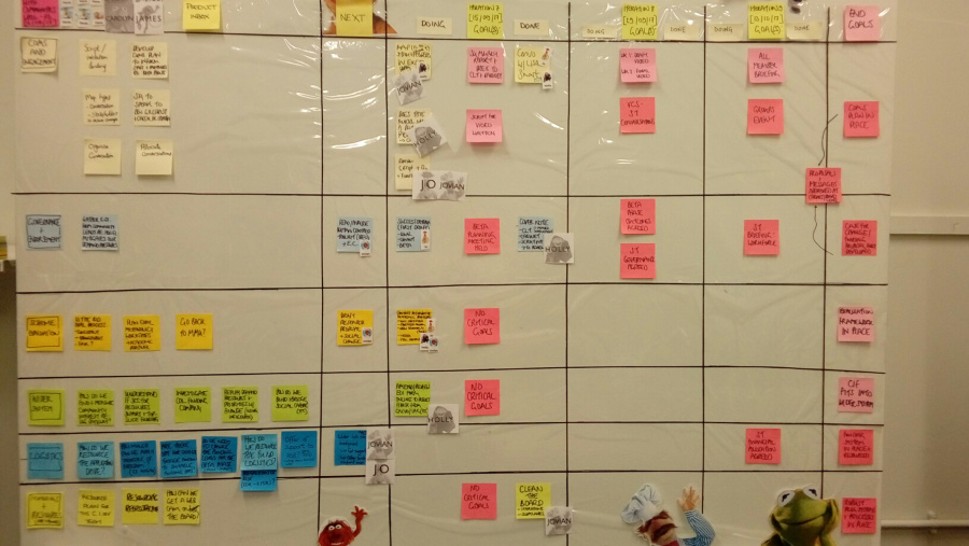
Limit work in progress. This is recognisably lean agile territory (which the new Deputy Chief of Staff will recognise from some of the ways we worked at Stockport Council.)