I think consultancy is closer to haulage than most people imagine.
We move things around: ideas, methods, bits of practice, half-tested arguments, useful questions. Some are picked up in one place and delivered almost intact somewhere else; others get repacked on the way.
At Question Factory, a lot of our work is moving ideas and experience down the West Coast Mainline, or across the M62, as lessons from Greater Manchester and the Liverpool City Region travel to new places now building their own devolved institutions.
But the return journey is getting more interesting.
Newer strategic authorities are being formed with the benefit of a clearer devolution framework, more powers, and clearer expectations of their role in issues like public health and community safety. They are able to start with questions that older institutions had to discover by accident.
The trade in ideas between the existing and newly forming MSAs is becoming an increasingly fruitful space to work in and is sparking lots of thoughts about where an ambitious devolution policy should go next.
Usually, these would stay in client work for a while before we wrote about them more widely. But after spending two excellent days with the Devolution Priority Programme cohort (as kindly convened by the Leadership Centre, Metro Dynamics and Future Governance Forum) – and given our next PM is likely to be the “mayor of some town…” – this feels like a good time to put some of them into the open.
So, these are some notes from the work we are doing now.
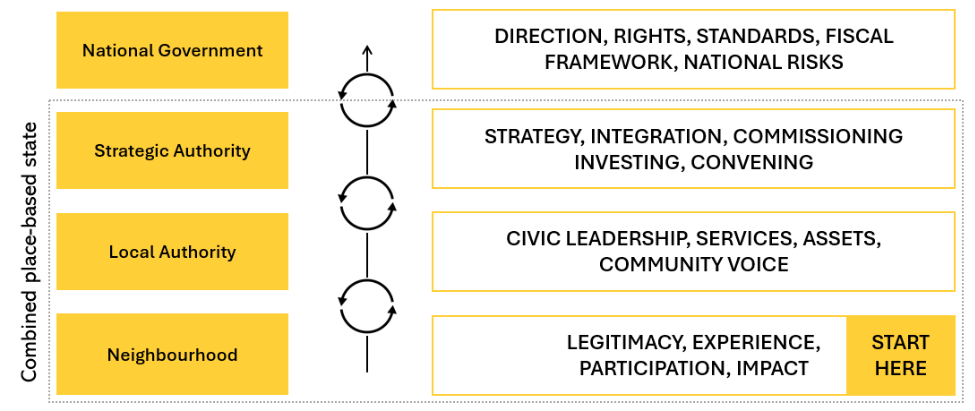
The central thought is that the next phase of devolution is best understood as the practical work of rebuilding the place-based state.
Rebuilding the place-based state
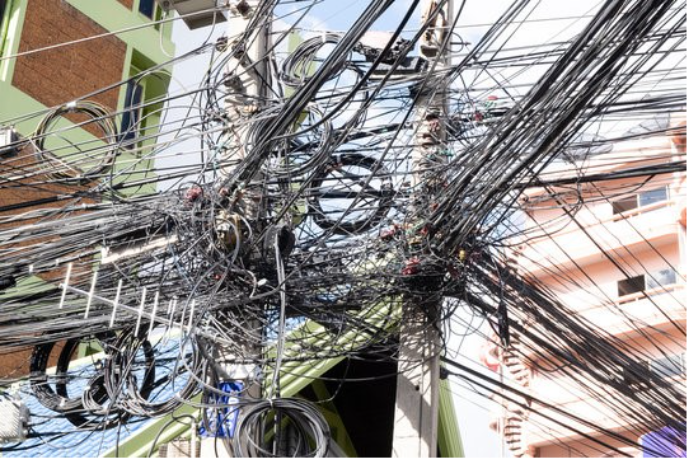
The 20th century state was largely built around vertical systems: departments, funding lines, inspectorates, agencies, professional silos, national programmes and service rules.
There were good reasons for some of this, including the limits of analogue communications and linear theories of power. And of course, some functions can only sensibly sit at national scale.
But a family does not experience housing, health, employment, transport and education as separate things; a town centre does not experience business confidence, public safety, planning, transport and utilities as separate things.
Places receive the state whole, even when the state is organised in pieces.
An ambitious future devo policy – focused on deepening and not just broadening devolution – needs to engage with the question, “how should the state work when it starts from people and places?”
The diagram below is deliberately simple – it’s a sketch of a better system.